Best Hydroponic Systems 2026: Expert Picks from $25-$1,000

Home grower and obsessive researcher. Years in commercial product sourcing means I evaluate growing equipment the way a buyer does — specs, build quality, and real-world performance, not marketing claims.
Just so you know, some links on this page are affiliate links. If you buy something via them, we get a small kickback. You don't pay more, but it helps toward seeds and kit.
The first time you grew lettuce without soil — roots dangling in a jar of nutrient solution on a windowsill — the thing that struck you wasn't how well it worked. It was how obvious the whole system suddenly seemed. Plants want water, nutrients, and oxygen at their roots. Hydroponics delivers all three directly. Everything else is just engineering decisions about how to do it.
Quick Picks: Best Hydroponic Systems 2026
Not sure which setup is right for you?
Take Our QuizThe honest truth: Most beginners should start with either a countertop unit or DIY Kratky. Both work. Countertop units cost more but eliminate setup decisions. Kratky costs almost nothing but teaches you how hydroponics actually works.
Understanding Your Options
Hydroponic systems fall into a few categories. Each has trade-offs in cost, complexity, and what you can grow. There's no universally "best" system, just the right one for your situation.
Passive Systems (Kratky Method)
The simplest entry point. A container, net pots, nutrient solution, and plants. No pumps, no electricity beyond lights if you need them. Roots sit in nutrient water with an air gap for oxygen.
A good place to start is three mason jars on a windowsill — two lettuce, one basil. The basil will likely go wild; the lettuce takes longer but comes good. Budget about $20 for everything except seeds.
The method works because as plants drink, the water level drops naturally. Roots that were submerged become exposed to air for oxygen. New roots grow downward to follow the water. The plant essentially regulates itself.
Cost: Around $25-50 to DIY, or around $40-80 for ready-made kits. Perfect for lettuce, herbs, spinach, and leafy greens. Not ideal for larger plants like tomatoes unless you use big containers and are prepared to top up nutrients.
**Deep Water Culture (DWC)**
An air pump bubbles oxygen into nutrient solution where roots sit submerged. More active growth than Kratky because roots get constant oxygen rather than relying on the air gap.
This is probably the most popular system for home growers who want to step up from Kratky. The bubbling action keeps roots healthy and prevents the stagnation that causes problems in static systems.
A basic DWC bucket costs around $40-60 to set up. You need a bucket, lid, net pot, air pump, air stone, and tubing. The DWC 4-Plant Kit is a more refined option if you want everything in one box.
Cost: Around $50-130 for a basic setup. Handles larger plants well. Tomatoes, peppers, and cucumbers all thrive in DWC. The pump adds a small electricity cost (a few dollars per month) and needs occasional maintenance.
**NFT (Nutrient Film Technique)**
A thin film of nutrient solution flows continuously over roots in sloped channels. Commercial greenhouses use this for lettuce production because it's incredibly space-efficient.
NFT systems are readily available on Amazon and from specialty hydro shops like HTG Supply and Hydrobuilder. Expect to spend $150-300 for a home setup that handles 4-8 plants.
The trade-off is pump dependency. If your pump fails, plants suffer within hours. NFT suits people who check their systems daily.
All-in-One Countertop Units
The iDOO 12-Pod and AeroGarden Harvest Elite bundle everything: reservoir, pump, grow lights, timer. Add water, nutrients, and seeds. That's it.
On a kitchen counter, the iDOO grows basil brilliantly, and the convenience is the real draw. Would you learn as much about hydroponics as building your own system? No. Does that matter when you're picking fresh basil for dinner? For most people, also no.
The AeroGarden runs double the price but includes app guidance, a wider range of seed pod kits, and arguably the best customer support in the industry. Whether that premium is worth it depends on how much hand-holding you want.
What to Avoid
Ultra-cheap Amazon units under $50: The lights are usually inadequate and the pumps fail quickly. You get what you pay for.
Aeroponic systems for beginners: Aeroponics mists roots rather than submerging them. Brilliant technology, but the timing is critical and there's no buffer if something goes wrong. Learn with simpler systems first.
Overcomplicated setups: You don't need automated pH dosing, EC monitors, and environmental controllers to grow lettuce. Start simple. Add complexity when you understand the basics.
My Recommendations
**Best for Most Beginners: iDOO 12-Pod** Plug in, add water and nutrients, grow herbs. The built-in 23W LED light handles a 12-pod herb garden easily. Timer runs automatically. You'll be harvesting basil within 4 weeks.
**Best Premium Option: AeroGarden Harvest Elite** App-guided growing with excellent seed pod ecosystem. More expensive than competitors, but the guided experience and customer support justify the premium for total beginners.
**Best for Larger Plants: [DWC 4-Plant Kit](https://www.amazon.com/dp/B00CHEIO6Y?tag=hydroponicadvice-20&ascsubtag=best-hydroponic-system-us)** Handles tomatoes, peppers, cucumbers. One plant per bucket, easy to manage, scalable.
New to all this? Our [beginner's guide](/guides/hydroponic-beginners-guide-us) covers the fundamentals. If Kratky appeals, the Kratky method guide has everything you need. And if you're deciding between DWC and NFT, we have a detailed comparison.
Not sure which system suits your space and goals? Take our quiz for a personalized recommendation.
Whatever system you start with, the fundamentals are the same: water, nutrients, oxygen at the root zone, and light above. Every upgrade you make — from Kratky jars to NFT channels to full DWC — is just a refinement of those basics. Start simple, understand what's happening, and scale from there.
Choosing the Right System for Your Space
The question isn't "which system is best" — it's "which system suits your space, time commitment, and growing goals?"
Small kitchens and apartments: Countertop units win here. They're designed for exactly this situation — compact footprint, no external ducting, quiet operation. The iDOO and AeroGarden both fit on a standard counter and handle herbs and salad greens excellently.
Basements and garages: More flexibility. A 4x2 grow tent with DWC buckets can produce serious yields of tomatoes, peppers, and cucumbers. You'll need supplemental light (the space is typically dark), ventilation, and you'll want to monitor temperature.
Spare rooms or dedicated grow spaces: NFT channels or flood-and-drain systems scale best here. Commercial-style production is achievable.
System Comparison: Real Trade-offs
Countertop All-in-One vs DIY Kratky
All-in-one costs 4-5x more. What do you get for that? - Built-in LED lights on a timer (saves you buying a light separately) - Pump and reservoir integrated (no setup decisions) - Seed pod ecosystems with support resources - Aesthetically designed for visible placement
DIY Kratky gets you: understanding of how hydroponics actually works, very low cost, and the flexibility to scale in any direction.
Neither is objectively better. If you want to understand what's happening, start Kratky. If you want fresh herbs without learning anything, buy a countertop unit.
**DWC vs Kratky for Larger Plants**
Kratky works for tomatoes in large buckets, but requires more attentive management — reservoir levels need monitoring daily during peak growth. DWC with continuous aeration delivers more consistent oxygen and is more forgiving for thirsty plants.
For most growers' first experience with fruiting plants, DWC in 5-gallon buckets is more reliable than large Kratky setups.
Budget Planning: The Three Entry Points
There are three sensible ways in, and the gap between them is real.
Budget Kratky setup, the cheapest way in. A few mason jars or opaque containers, net pots and clay pebbles, a bottle of general-purpose nutrients, pH test drops, and seeds. That is the whole list. It costs less than a weekly shop and teaches you more about how hydroponics works than anything else you could buy.
Countertop system, convenience over cost. An all-in-one unit like the iDOO or an AeroGarden, plus your ongoing nutrients, a basic pH kit, and seed pods or your own seeds. You are paying for the integration: light, pump, timer and reservoir in one box, with no setup decisions to make.
**Beginner DWC for vegetables, the step up to real yields.** A four-bucket DWC kit, a proper 200W-class LED, a fan and carbon filter for airflow, nutrients and a pH kit, and seeds or seedlings. This is the tier where you start growing tomatoes and peppers rather than just herbs.
These cover your first grow. After that, ongoing expenses are mostly nutrients and electricity, both modest at home scale.
US Retailers Worth Knowing
Beyond Amazon, hydroponic equipment is well-served by specialty retailers:
HTG Supply — national chain with physical stores and strong online presence. Good for larger equipment and in-person advice.
Hydrobuilder.com — extensive online selection, often better pricing than Amazon for brands like General Hydroponics and CANNA.
Growers House — Tucson-based with good selection and knowledgeable staff.
Local hydroponics shops — search "hydro store" in your city. Staff knowledge varies but can be excellent for troubleshooting and local product recommendations.
Frequently Asked Questions
What's the cheapest way to start?
Mason jar Kratky with seeds from a grocery store. Total cost around $25. It works, and it teaches you how hydroponics functions better than any other entry point.
Is it worth buying the AeroGarden over cheaper alternatives?
The AeroGarden's main advantages are the seed pod ecosystem and customer support. If you'll use their proprietary seed pods and value hand-holding, yes. If you'll use your own seeds and nutrients (which most experienced growers prefer), the iDOO at half the price does the same job.
Can I grow cannabis hydroponically?
Not answering that in a general growing guide — check your state laws and consult resources dedicated to that specific topic.
How long before my first harvest?
Lettuce: 3-4 weeks from seedling. Basil: 4-6 weeks from seedling to heavy harvest. Tomatoes: 8-12 weeks from transplant to first fruit. AeroGarden seed pods are often a week slower than growing from seed due to pod moisture characteristics.
Do I need a dedicated electrical circuit?
For small setups (countertop units, single DWC bucket): no, a standard outlet handles it fine. For larger setups with 400W+ of lighting plus fans: consider the load on the circuit. A 15-amp circuit handles about 1,800W safely.
Every successful hydroponic grower started with a single plant in a simple setup. The technology is accessible, the learning curve is shallow at the beginning, and the first successful harvest — roots in water, plants thriving without soil — is genuinely satisfying. Start simple, understand what's working, and scale from there.
Growing Your First Crop: What to Expect Week by Week
Hydroponics moves faster than soil gardening. That speed is part of the appeal — and it also means problems show up quickly if something’s off.
Week 1 (Germination / setup): Seeds in net pots with a little moisture. Almost nothing visible happening above the surface. Roots are establishing. Don’t flood the system yet — seedlings need moisture, not submersion. Kratky growers: fill to just below the net pot base so roots can reach without drowning. Countertop units handle this automatically.
Weeks 2-3 (Rapid early growth): Once roots hit the nutrient solution, growth accelerates noticeably. Expect 1-2 inches of new growth per day on fast crops like lettuce and basil. This is when your pH and EC management matters most — roots are taking up nutrients actively. Check pH every 2-3 days. Target 5.8-6.2.
Weeks 3-5 (Canopy development): Leafy greens and herbs approach harvest size. For lettuce, outer leaves can be harvested while the plant continues growing — the "cut and come again" method extends your harvest window by weeks. For basil, pinch flower buds as they appear to redirect energy into leaf production.
Weeks 5-8+ (Fruiting crops): Tomatoes and peppers take longer. Once flowering starts, shift your nutrient EC slightly higher (1.8-2.2 for tomatoes) and ensure good airflow around flowers for pollination. In a sealed grow space, gently shake plants every few days or use a small oscillating fan.
The biggest first-grow mistake isn’t technical — it’s overreaction. Yellow leaves on day 3 don’t mean the crop is failing. Most early yellowing is transplant stress or slightly off pH. Adjust, wait 48 hours, observe. The plant will tell you whether the fix worked.
Water Quality and US Tap Water
US tap water varies significantly by region — more so than most growers expect. This affects your starting EC and whether you need cal-mag supplementation.
Check your starting EC first. Fill a glass with tap water and test it with an EC meter before adding any nutrients. Readings above 0.4 EC mean your tap water already contains significant dissolved minerals. You’ll need to account for this when mixing nutrients — your total EC target (nutrients + tap water) stays the same regardless of what’s already in the water.
Hard water areas (Southwest, Florida, much of the Midwest): Calcium and magnesium levels in tap water may already be adequate. Adding a cal-mag supplement on top risks oversupply, which shows as brown leaf tips similar to nutrient burn.
Soft water areas (Pacific Northwest, parts of the Northeast): Lower mineral content means cal-mag deficiency is more likely, especially for fruiting plants. Calcium deficiency in tomatoes causes blossom end rot — the dark, sunken patch at the bottom of the fruit.
For growing tomatoes hydroponically in the US, the hydroponic tomatoes US guide covers system selection and yield expectations.
Chlorine and chloramine: Most US municipalities treat tap water with chlorine or chloramine. Chlorine off-gasses overnight if you leave water in an open bucket. Chloramine doesn’t — it requires either a carbon filter or a small dose of sodium thiosulfate to neutralize. If your plants seem healthy but roots look slightly brown despite good pH and EC, chloramine could be a factor.
For most growers, tap water works fine with standard nutrients. The adjustment is minor once you know your baseline EC. Filtered or RO water is only worth the expense if your tap water EC consistently exceeds 0.6.
Scaling Up: From One Bucket to a Real System
Most growers start with a single countertop unit or one DWC bucket. Once the first crop works, the natural question is: what’s next?
Countertop unit users: The easiest step up is a second unit or a larger AeroGarden model (the Farm series handles 24-36 pods). Alternatively, move to DIY DWC for larger plants — the skills transfer directly.
**DWC growers:** A manifold or recirculating setup connects multiple buckets to a central reservoir. This reduces maintenance significantly — one reservoir to top up and check instead of four. The RDWC (recirculating DWC) setups available from US hydro retailers like HTG Supply handle 4-8 plants efficiently.
NFT for lettuce production: If leafy greens are your goal, a 6-channel NFT system can yield 36-48 heads of lettuce in a 2x4 foot footprint. This is where hydroponics becomes genuinely productive compared to soil. With staggered planting (starting new seeds every 2 weeks), you get continuous harvest rather than one large batch.
If you are still deciding whether hydroponics is right for you, the hydroponics vs soil US guide covers the honest trade-offs.
The all-in-one route, complete grow-tent kits: If sourcing a tent, light, fan, filter and ducting separately sounds like work, a complete kit does it for you. The Spider Farmer 2x4 Complete Kit bundles a 2x4 tent, an SF2000 LED, an inline fan, carbon filter, ducting and hangers into one box that actually fits together, and you just add the growing system and the seeds. For a full 4x4 footprint, the VIVOSUN Smart 4x4 Kit adds WiFi-integrated fan and light control, and the Spider Farmer 4x4 SF4000 Kit steps up to a 450W-class light for a full canopy of fruiting plants. These are the difference between a countertop novelty and genuinely growing your own food indoors.
The economics at scale: A 4x4 grow tent with DWC, adequate LED lighting, and proper ventilation runs around $600-800 to set up well. Annual nutrient costs are $150-200. Electricity adds $15-25/month depending on your rates and setup size. At typical grocery prices for organic herbs and premium lettuce, a well-run 4x4 can produce more than a family of four can consume.
What I’d Buy Today
iDOO 12-Pod for herbs and leafy greens on a budget. AeroGarden Bounty Basic if you want nine pods, 24-inch height for tomatoes, and AeroGarden's seed pod ecosystem. For a complete setup in one box, the Spider Farmer 2x4 Complete Kit is the most complete grow-tent bundle you can buy in the US without sourcing parts separately.
For a detailed look at the AeroGarden range specifically, see the AeroGarden review US. Not sure whether the Harvest or Bounty is the better fit? The AeroGarden Harvest vs Bounty comparison gives you a clear answer. And if you heard AeroGarden shut down, here is whether it is still in business in 2026. Want something much bigger and hands-off? The Gardyn Home 4 review covers the 30-plant vertical system.
Whatever you choose, start with herbs — basil, mint, lettuce. They’re forgiving, grow fast enough to give you feedback within days, and the first time you harvest fresh basil that grew in water on your kitchen counter, you’ll understand why people get hooked on this.
For growing lettuce hydroponically in the US, the hydroponic lettuce US guide is the easiest starting crop.
Troubleshooting Your First Setup
The two most common first-grow problems are pH drift and overfeeding. Get a pH meter (around $15-20) before anything else. Target 5.8-6.2 for most crops. Plants that look sick in their first week are almost always a pH problem, not a nutrient problem.
Start nutrients at half the recommended strength. Labels are written for mature, actively growing plants. Young seedlings at full-strength nutrients show burn within days — brown leaf tips that don’t reverse. Half strength for the first two weeks, then gradually increase as plants respond.
Algae (green slime in your reservoir) means light is reaching the water. Cover any clear tubing or reservoir sides with black tape or a dark cover. Change the reservoir immediately if you see algae — it competes with roots for oxygen and spreads fast.
What You'll Need With It
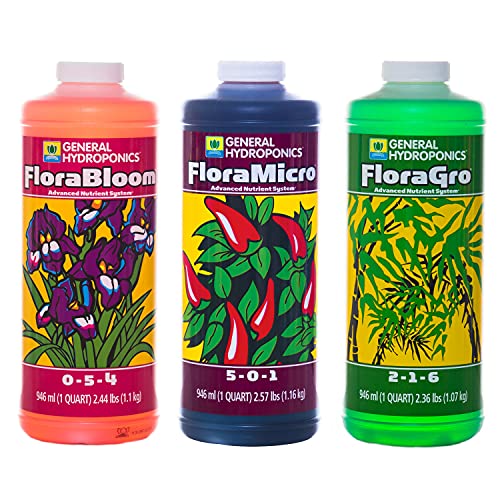
Complete 3-part nutrient system for all growth stages. Industry-standard formula used by beginners and professionals worldwide. 500ml each.

Accurate digital pH meter for precise nutrient solution monitoring. Includes calibration solutions and carrying case. Auto-temperature compensation.

Measures electrical conductivity (EC) and total dissolved solids (TDS) in nutrient solutions. Essential for precise nutrient management.
Products Mentioned in This Guide
Find Your Perfect Setup
Answer a few quick questions and get personalised recommendations.
Start the QuizFrequently Asked Questions
Related Guides
Ready to find your perfect setup?
Our quiz matches you with the right system, lights, and supplies.
Take the Quiz - It's FreeNo email required